I mentioned in an earlier post that I presented at BETT back in January around the theme of schools and computer science. I just wanted to share with you the video from this talk:
The other videos from the event are posted by BettShow on YouTube.
I mentioned in an earlier post that I presented at BETT back in January around the theme of schools and computer science. I just wanted to share with you the video from this talk:
The other videos from the event are posted by BettShow on YouTube.
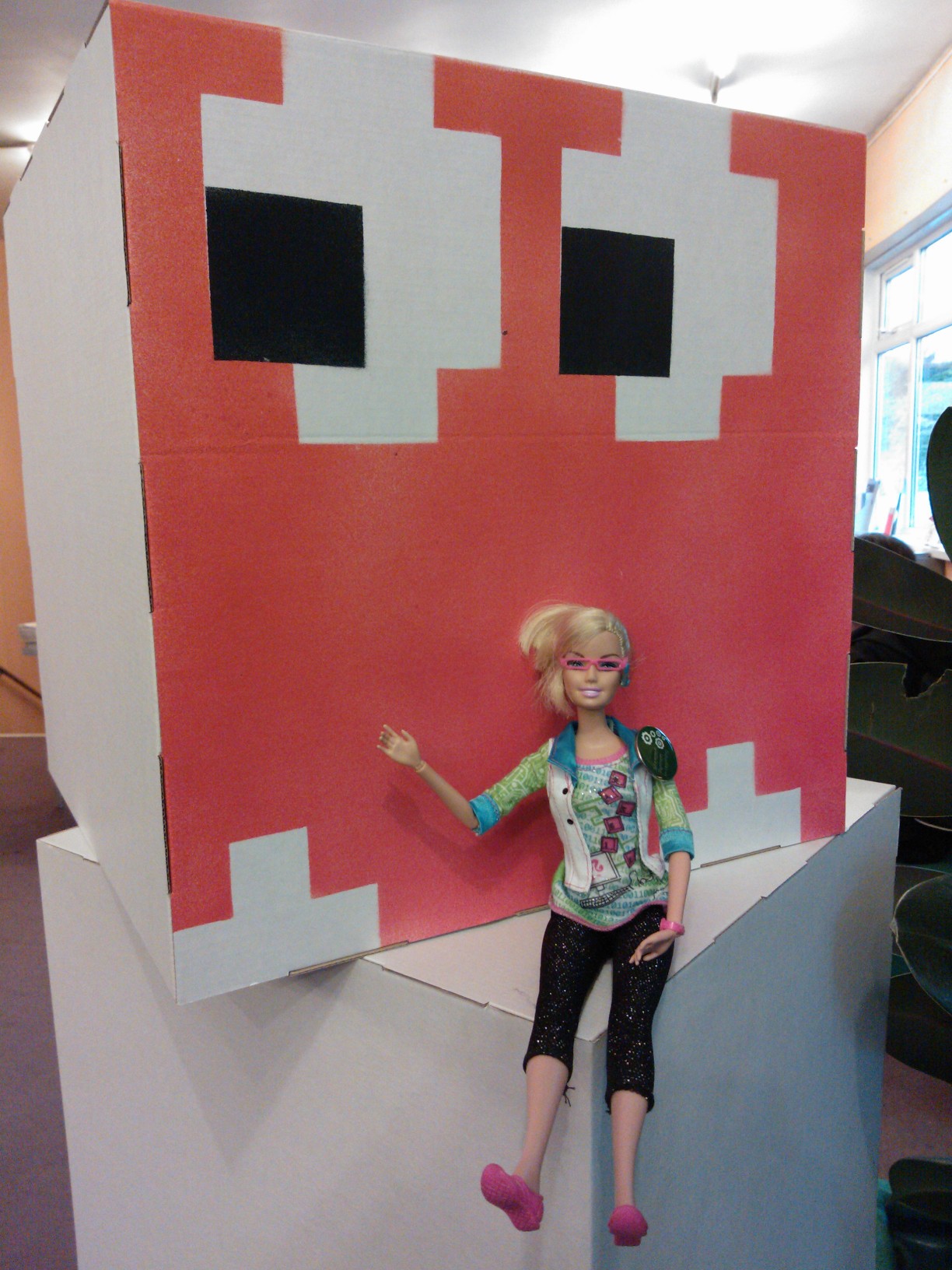
Following on from my post about BETT, I mentioned that one of the challenges I raised in my talk was that of encouraging girls into the IT/Tech industry. As many of you will have already read, I recently launched Geeky Barbie’s Travels; a site dedicated to my mascot “Geeky Barbie”, which documents interviews with real women in the IT industry. It is hoped that girls will be able to read about the wide variety of jobs available and find inspiration in some of the stories, they may even consider a career in the industry themselves. Here’s where I need some help! I have a flyer here, which can be printed and handed out to girls in schools, I would love it if some of you would download and distribute to girls in your own schools!
I recently attended an event in Margate called GEEK (Games Expo East Kent) and it was very apparent from looking around that the event was very male dominated. Myself and Geeky Barbie 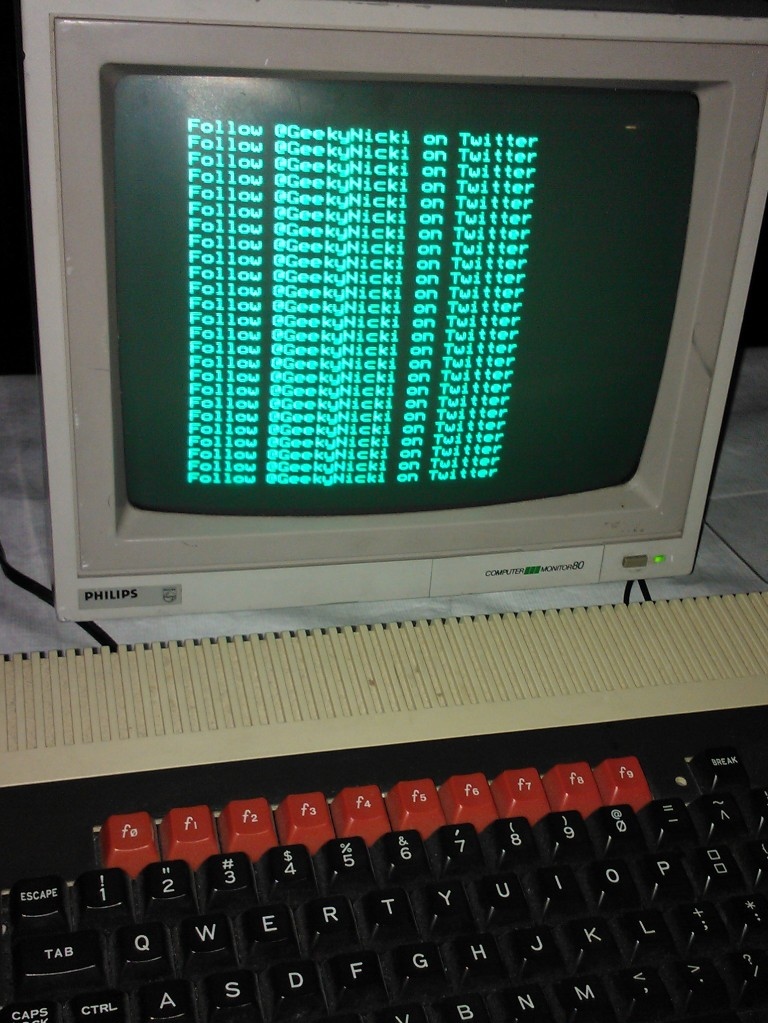 had a great time, I particularly enjoyed playing with the BBC Micros and reminiscing over old computer games. There was also an array of various arts and crafts on show too; I was rather impressed with the paper-craft video game and TV characters and I’m actually going to have a go at making Sackboy this weekend! (I’ll tweet a picture of the final product!)
Attending this event got me wondering where all the girls were! Why was I in the minority? Speaking to the girls in my school, most of them are more interested in pop stars and surfing the Net rather than using computers in a more creative way; many of them want to pursue what we would regard as traditional “women’s jobs”, hairdresser, beautician, nursery nurse, midwife etc. I’ve decided that if I’m going to persuade them to consider a career in the IT industry I am first going to need to learn what is putting them off from the start! They generally seem to enjoy ICT in Key Stage 3 and even Key Stage 4, but when it comes to their sixth form options they just don’t opt-in. Across three new A-Level groups this year I only have one girl! Which is my lowest number ever! I want to know what puts them off. In my school most of the IT teachers are actually women too so they do have some positive role models.
My next intention in my Geeky-Barbie crusade is to compose a questionnaire to carefully try to work out why girls turn-off from the subject, why they don’t seem to see it as a viable career option. This is where I need some more help, I know if I write the questionnaire on my own I’ll miss out a vital question and I want to get it right. Therefore I’d be REALLY grateful if any of my readers could comment below with suggestions of questions I could include. I’ll then share the questionnaire online so teachers can carry out the survey in their own schools too.
Please do help with question ideas, I really want this to be as comprehensive as possible! Also please share this with others who may be able to help!
Thanks for reading!
That’s right, I did say “free”!
A few weeks ago I had the pleasure of organising an INSET training day in my school. This is one of my roles as an AST and being the ICT INSET Day for the year I was keen to get stuck in!
After surveying staff earlier in the year I had an idea of what kind of ICT training staff wanted so based on this I arranged for some of my colleagues to deliver sessions and offered staff six sessions in total, they could opt-in to four of these:
I delivered the last session on the list and it occurred to me that I should really share this further a-field than just teachers in my own school, so as it’s half term I finally have enough time to write this post! This session addressed recent ITL research by Microsoft which led us into discussing the fantastic Partners in Learning (PiL) website on which Microsoft provide a huge number of FREE tools for teachers to use in their classrooms, not to mention the vast array of learning resources and discussions by other teachers across the world. This is a place for collaboration and sharing ideas, particularly if you are interested in gaining links with schools in other countries.
The tools I looked at within my session are part of the Learning Suite, this is a collection of free tools, and the Learning Suite application gives you a nice interface to download each tool. Some of these tools are also available freely elsewhere, whereas others are only available for free if you are a member of the PiL Network:
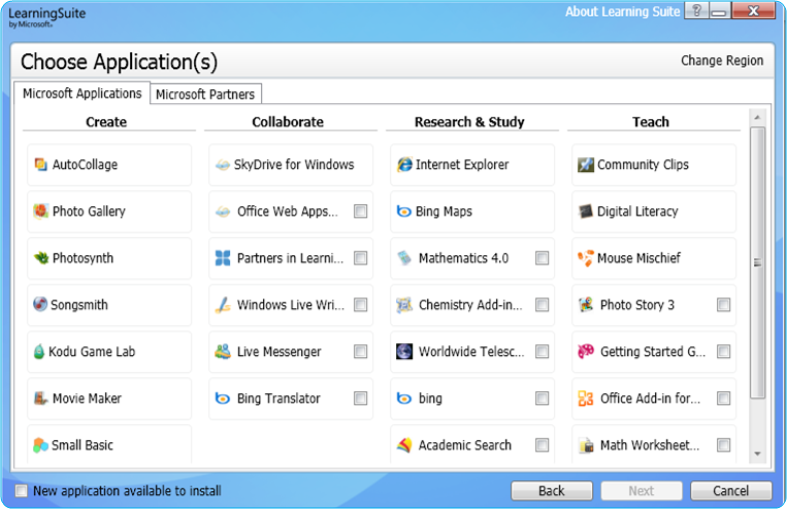
There are 29 free tools featured as part of the Learning Suite but in my training session I only had time for three:
Following the exploration of these tools staff were then encouraged to sign up to the site so they too could gain access to these tools and resources. I wanted to encourage this as joining the Partners in Learning Network three years ago really was one of the best decisions I have made. I signed-up when I won a competition to win 20 netbooks for my school, since then I have received free training in the form of a summer camp and have attended national, European and global forums! This has led me down an exciting path, meeting and collaborating with hundreds of other educators and I have never looked back! So my one piece of advice this half term – sign up to the Partners in Learning Network!
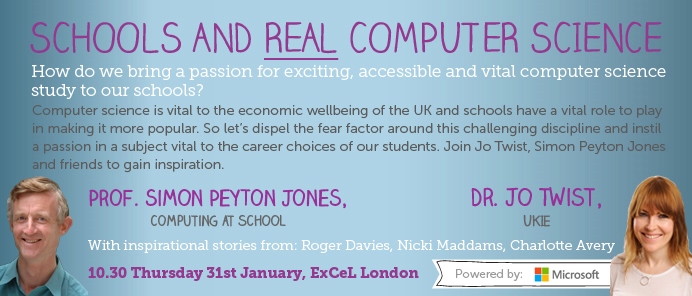
Like many of you, a little over a week ago I attended BETT. I was in attendance for two reasons, firstly to deliver a presentation within the Arena session on Schools and Real Computer Science and secondly to launch the Kodu Kup!
Presenting in the arena was an amazing experience and I was honoured at being invited to be part of the panel alongside Doctor Jo Twist(CEO of UKIE, the leading authority on the UK games industry), Professor Simon Peyton Jones (Principal Researcher for Computer Science at Microsoft), Roger Davies (Director of IT at Queen Elizabeth School) and Charlotte Avery (Head Mistress of St Mary’s School). Here’s a summary of what the session covered:
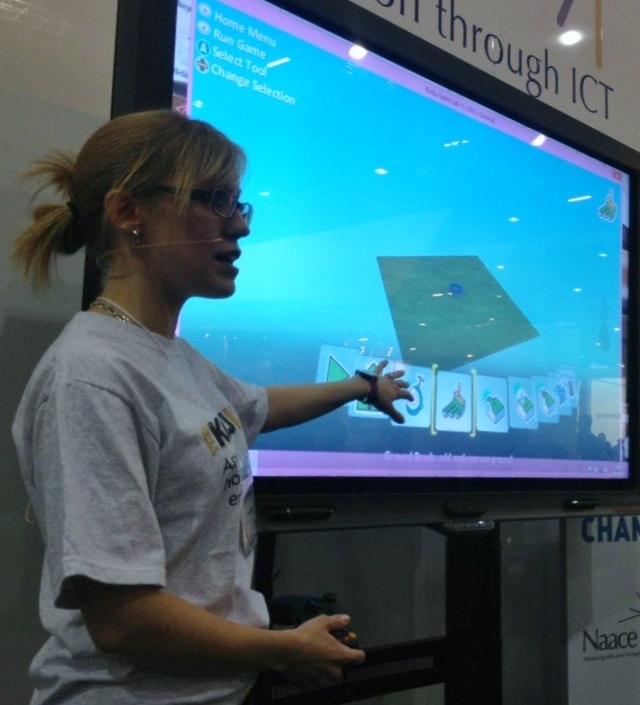
In my section, I talked about my four main challenges in relation to computing, which were:

Following the morning session I was thrilled to be the person to officially launch the Kodu Kup in the UK! I have been working with Microsoft since September to produce resources for the competition and it was great to see it all come together to be launched at BETT.
 The Kodu Kup is open to any child enrolled in a UK school and who is aged between seven to fourteen years of age. Children may enter competition as individuals or as part of a team of up to three people.
There are three different game themes to choose between, children can either create a retro arcade game, a game to help teach and understand water awareness or a Mars exploration game.
All entries are made by the teacher through the Microsoft Partners in Learning website by the 31st May. The top ten entrants (groups or individuals) will be invited to Microsoft Headquarters in Reading where they will participate in workshops and present their games to a panel of judges. In total three winning entrants will be announced who will each receive an Xbox 360 with Kinect.
It’s going to be an exciting few months and I can’t wait to see some of the entries! To get started with the competition download the Teachers Pack and keep up-to-date with news about the competition by liking KoduKup on Facebook and following @KoduKup on Twitter.
 Wow! What a week!
I got back from the Microsoft Partners in Learning Global Forum on Sunday and am still buzzing! I was at the conference to showcase the work I have done using Kodu Game Lab; while I was there I had the privilege of meeting hundreds of educators from across the globe. It was fascinating to hear their stories and find out about challenges faced in other countries, some of which (such as literacy) are not so different to our own.
This blog-post documents my journey through the week and my experiences of each day. There are also lots of bits I have missed out as if I began to describe every experience I had while I was there this would be an extremely long post. Therefore I have just summarised each day!
After setting up our stands, Wednesday began with a talk by the inspiring Simon Breakspear; a passionate and energising speaker. We discussed various points as a table, made up from educators from the UK, Finland, Sweden and Switzerland. We were encouraged to think of ideas to make learning more meaningful, we took these from our own experiences and came up with the following (in priority order):
 This session was followed by the Welcome Reception where we had the chance to chat and network with other educators in a more informal setting. Being the geek that I am I particularly enjoyed talking to Peli de Halleux about the TouchDevelop platform for programming, along with how it can be used across multiple platforms. I had been following his online learning course so it was nice to meet him in person! It was also great to meet some of the people I had previously met in Lisbon earlier in the year.
Day 1 opened with keynote speeches. Anthony Salcito’s was particularly engaging, he was joined at one point by Lauren Ipsen (Corporate Vice President) who announced Microsoft’s US$250 million, five-year renewal of the Partners in Learning program, which is great news. Anthony also talked about his year-long journey, profiling educators from around the world in his blog called “Daily Edventures“, I featured on here myself on 2nd August and today Bill Gates was featured.
He talked about trends changing the way we work, learn and live and how our students are “learning without us”; this is so right, a student just today was telling me how she’d been training herself in a piece of software using YouTube videos, it was only at this moment that I realised what a fantastic world our young people now live in, if they want to learn something new there are always free resources online to do it. I find this so wonderful and exciting!
Anthony then gave a fantastic demonstration of Microsoft Surface which was met with lots of “oohs” and “aahs” by the audience; I can’t wait to try one of these out in my classroom, hopefully I’ll be lucky enough to get hold of one next year! He showed a couple of apps that look interesting, such as Khan Academy, Kno and Dreamwalk. He demonstrated the use of multiple screens and how the Windows search feature goes across multiple resources, including installed apps, programs, email, apps and the Internet. Another point to consider is that being a Windows device they can have multiple accounts so students can be logged-in as a different user to the staff and therefore increasing security on the device. We also were given a showcase of the newest features of Office 2013, as an ICT teacher I was almost drooling at this, particular highlights were being able to search for Creative Commons pictures from within Word, having text-wrapping that works well and Excel automatically (and intelligently) inserting functions for you!
On Day 1 I also met the first two of my judges for the competition. Although this was quite a scary experience, they made me feel at ease as I told the story of my project.
Day 2 began with a keynote speech by Chet Linton who talked about creating effective learning environments. He talked about 21st century skills and the fact that we are training our students for jobs that don’t yet exist.
One particularly interesting point he made was that the school in Hawaii with the highest literacy levels does not teach literacy. Instead the young people work on various outdoors projects and have to write-up what they have been doing, this gives them a sense of purpose to their writing.
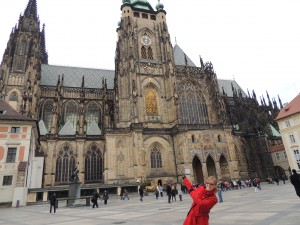 For me this was also my final day of judging but first we took part in a learning excursion to Prague Castle where we were instructed, as a group, to gather resources in order to construct an interactive tour guide of the castle. Our groups’ effort can be found here.
While on my stand Geeky Barbie also had a special visitor. As many of you know Geeky Barbie is my mascot that regularly makes an appearance at conferences I attend. Today
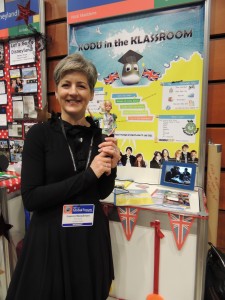 she met Lauren Woodman who is general manager for public sector programs at Microsoft and also Laura Ipsen from yesterday’s key note. From this, sparked a later discussion with the PIL Manager in the UK, Stuart Ball in which I had the idea to make Geeky Barbie an icon for getting more girls interested in a career in IT. Since then she now has her own Facebook page and will soon be setting up a blog that will include interviews with women in IT, detailing their inspirations, qualifications etc. (I’ll post more on this later).
On Day 3 I was relieved that the judging process was now over and I was able to meet some of the other educators. Some particular highlights for me were:
 Let’s Go to Disneyland (Cheryl Arnett and Melany Neton from the USA) – These ladies were my neighbours for the week and their project allowed first and second graders to research, plan, and travel virtually to Disneyland on Xbox360 Kinect. Using Skydrive OneNote Web documents, collaborative teams built knowledge and developed critical thinking skills in maths, literacy, and geography, keeping imaginative journals of their experience and creating brochures and post cards for family and friends.
 Child Labour; A Child’s Perspective (Sarah Freda Adei from Ghana) – Sarah’s story moved me, she lives in a community where child labour is prevalent. Her students were tasked to learn first hand the impact labour has had on the victims’ well-being. Information gathered revealed that victims desire to quit labour activities. Enrolling some of them in school enabled the students to solve a real life problem.
 Zero to Heroes (Julio Berríos from Puerto Rico) – Julio helped students develop 21st century skills through the design and implementation of a campaign. It is a continuous project with an incredible multiplier effect in which students use technology and real cases to help create awareness about violence in Puerto Rico and the World. They have set up a mobile phone app which can be used to take a photo and document good deeds that they have witnessed, completely focussing on the positive!
Unfortunately I didn’t manage to get around to everyone which was a shame as I know there were so many inspirational stories in the room.
 The day ended with a TeachMeet; this is a series of presentations led by teachers with each presentation lasting a maximum of three minutes. I had “volunteered” for this at the beginning of the week but with the excitement of the previous few days I had completely forgotten! I therefore presented the work I have been doing with Kodu. I was particularly impressed by the presentation of Bram Faems who talked about education in his school in Belgium. This is a school for children with special educational needs and one thing that stood out to me was his explanation of how they mark work. Instead of highlighting mistakes in a child’s work they highlight all of the bits they have done right such as correct spellings, punctuation etc. This seems like a great idea and would certainly work with some of the lower ability groups in my school.
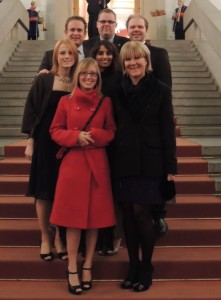 Day 3 finished with a Gala Dinner in the Spanish Hall at Prague Castle, this was a beautiful venue embellished with stucco decorations dating back to the 17th century. After a delicious meal, Lauren Woodman began to announce the winners. First up was my friend and other half of “Team GB”, Katie Boothman. Her project was called the H.I.T Squad and documented how her students had been using technology to bring History alive, examples include their use of PhotoSynth to create 3D images of castles, setting up a website of war-time memories (after visiting residents of a residential home) and more recently using MineCraft to recreate castles as they would have been. You can read more about her project here. I was so glad Katie won an
 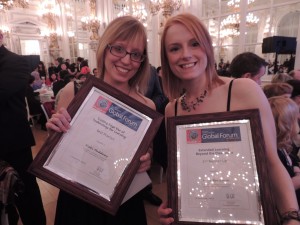 award for “Extended Learning Beyond the Classroom” as her project was fantastic! Congratulations Katie!
My part came when they announced the winner of the “Cutting Edge use of Technology for Learning” award, I was truly shocked to hear my name called out, it was such a huge honour!
There were also many other winners and you can read about each of the winning projects on Microsoft’s Site.
So as a final note; a thank you to Microsoft Partners in Learning for putting on such a wonderful, inspiring and enjoyable event and thank you to all of the other educators who shared their stories and experiences and helped to make the event so wonderful and personal. I have returned to school feeling inspired, rejuvenated and excited about the future of education and how I can make a difference to the young people I teach.
For further reading, check out the following blogs: